Skip to product information
1 of 2

Quickpen Pro Peptides

Thymosin Alpha-1 5mg

Thymosin Alpha-1 5mg

Regular price €77,00 EUR
Regular price Sale price €77,00 EUR
Sale Sold out
Taxes included. Shipping calculated at checkout.
Quantity

Description

Thymosin Alpha 1 is a synthetic analog of a naturally occurring thymic peptide fragment originally isolated from thymosin fraction 5. It is primarily studied in the domains of immunology, infectious disease research, and oncology-related immune models. In research settings, Tα1 has been observed to influence adaptive immunity, particularly T-cell maturation and dendritic cell activation.

Pen Dosage Chart

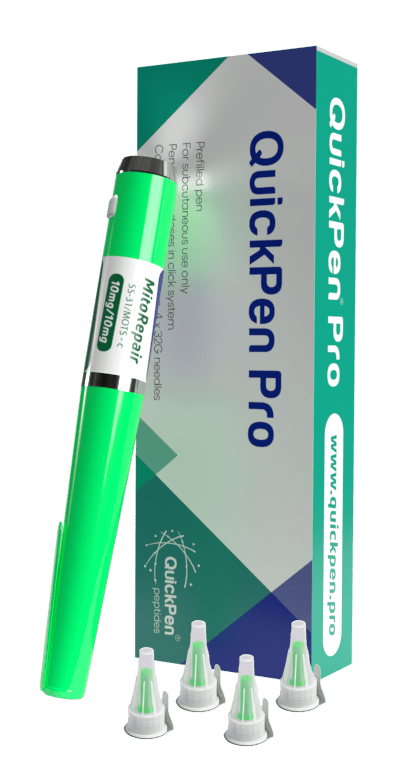
Thymosin Alpha-1 5mg QuickPen Pro
Volume 3.0 mL
mg/mL 1.66 mg/mL
Click-to-Dose 1 click = 0.016 mg
Example(s) 9 clicks(3 of Pen Scale) = 0.166 mg


Our formulation is provided in a stabilized pre-mixed injection pen for subcutaneous administration. This delivery method ensures high bioavailability and consistent experimental dosing compared to multi-step vial reconstitution. Each unit is prepared fresh for research protocols and is intended strictly for laboratory and experimental use only.

In research models, Thymosin Alpha 1 has been observed to modulate cytokine signaling pathways including IL-2, IFN-γ, and TNF-α. It appears to support immune balance by enhancing Th1 responses while regulating excessive inflammatory signaling. Its role has also been explored in viral research models where improved immune responsiveness was documented.

Clinical Status

Clinically evaluated and approved in certain regions for immune modulation research applications.

Mechanism of Action

Thymosin Alpha 1 works by interacting with immune cells, particularly T-lymphocytes and dendritic cells. Research suggests it enhances antigen presentation and supports the maturation of immune cells. This leads to improved coordination between innate and adaptive immunity. In experimental models, this has been measured as increased T-cell proliferation and cytokine regulation.

Benefits

  • Enhanced Immune System Coordination:
    Thymosin Alpha 1 has been studied for its role in adaptive immune regulation across multiple human and preclinical models. Research suggests it supports communication between innate and adaptive immune compartments. In experimental settings, improved T-cell signaling and dendritic cell activation have been documented. Rather than acting as a blunt immune stimulant, Tα1 appears to modulate immune balance. This regulatory profile makes it relevant in models investigating immune resilience and systemic immune stress. Evidence spans human clinical trials and mechanistic laboratory studies.
  • T-Lymphocyte Maturation And Activation:
    Clinical trials have shown increased CD4+ and CD8+ T-cell activity following administration in immune-compromised research populations. Enhanced IL-2 receptor expression and improved T-cell proliferation have been observed. In research models, this translates to stronger adaptive immune responsiveness. The peptide appears to influence thymic signaling pathways involved in T-cell differentiation. Laboratory data also indicate improved cytotoxic T-cell function. These findings position Tα1 as a key peptide in T-cell biology research.
  • Cytokine Modulation And Inflammatory Balance:
    In research models, Thymosin Alpha 1 has been observed to regulate cytokines including IL-2, IFN-γ, and TNF-α. It appears to promote Th1-oriented immune responses while moderating excessive inflammatory cascades. This dual action has been measured through shifts in cytokine expression profiles. Preclinical studies indicate reduced inflammatory signaling in certain immune stress models. The peptide’s regulatory influence is considered distinct from purely pro-inflammatory compounds. Evidence type includes human RCTs and animal models.
  • Support For Antiviral Immune Response:
    Thymosin Alpha 1 has been evaluated in viral research models where improved immune surveillance was observed. Clinical trials in infectious disease research suggest enhanced interferon signaling and T-cell responsiveness. Laboratory studies indicate activation of Toll-like receptor pathways involved in pathogen recognition. In certain regulatory-approved contexts, Tα1 has been used as an immune adjunct. Other applications remain strictly research-only. The mechanistic basis involves amplification of antiviral signaling cascades.
  • Dendritic Cell Activation And Antigen Presentation:
    In vitro studies demonstrate increased dendritic cell maturation following exposure to Tα1. Enhanced MHC class I and II expression has been documented. This contributes to improved antigen presentation capacity in experimental immune models. Efficient antigen presentation is essential for adaptive immune memory formation. Research suggests Tα1 may support this process through NF-κB pathway modulation. These findings are primarily derived from laboratory and animal data.
  • Oncology-Adjacent Immune Research Applications:
    Thymosin Alpha 1 has been studied as an immune adjuvant in oncology-related models. Research suggests enhanced cytotoxic T-cell activity and improved tumor immune recognition in certain experimental settings. It has been evaluated alongside conventional immune-modulating agents in human studies. The mechanistic rationale involves strengthening immune surveillance pathways. While some regulatory approvals exist in specific regions, broader uses remain research-focused. Evidence includes human trials and preclinical tumor models.
  • Toll-Like Receptor Pathway Activation:
    Technical studies indicate interaction with TLR-2 and TLR-9 receptors. Activation of these receptors leads to downstream NF-κB signaling. This cascade results in increased expression of immune regulatory genes. Laboratory measurements show enhanced interferon production and improved innate immune signaling. This mechanistic pathway is central to its immune-modulating profile. Data are derived primarily from in vitro and animal studies.
  • High Bioavailability Through Subcutaneous Administration:
    Provided in a stabilized pre-mixed injection pen for SubQ use, supporting consistent experimental dosing. Subcutaneous delivery has been associated with reliable systemic exposure in pharmacokinetic studies. This formulation simplifies research handling compared to multi-step vial reconstitution. Each unit is prepared fresh and formulated for research protocols only. The delivery method supports controlled absorption in experimental models.
  • Regulatory Recognition In Certain Jurisdictions:
    Thymosin Alpha 1 has received regulatory approval in select countries for immune-related indications. These approvals are specific and do not extend to all applications. Other uses remain classified as research-only. The existence of regulatory pathways provides additional human safety and pharmacokinetic data. 
  • Immune Resilience And Systemic Stress Models:
    Research models exploring immune suppression, systemic inflammation, and viral challenge have incorporated Tα1 due to its modulatory profile. Observed effects include improved immune cell coordination and balanced cytokine expression. These outcomes suggest a role in immune resilience research. The peptide does not function as a conventional stimulant but rather as an immune regulator. Evidence spans controlled human studies and mechanistic laboratory experiments.
View full details

FAQs

In most jurisdictions, purchasing peptides for legitimate scientific research is legal. However, laws vary by country and region. It is the researcher’s responsibility to ensure compliance with all local regulations. We do not sell to individuals for personal use.

We accept major credit cards, bank transfers, and cryptocurrency. Most domestic orders ship within 24–48 hours. International shipping is available to approved research institutions (delivery times vary by country and customs regulations).

Yes. Every batch undergoes independent third-party HPLC and mass spectrometry testing to verify purity (typically ≥98%) and identity. Certificates of Analysis (CoA) are available upon request for every product.

Reconstitution is typically done using bacteriostatic water or sterile water. Gently inject the solvent down the side of the vial and allow it to dissolve slowly. Do not shake vigorously. Refer to the specific peptide’s certificate of analysis or research protocol for recommended concentration.

For maximum stability, lyophilized (freeze-dried) peptides should be stored in a freezer at –20°C or below. Reconstituted peptides should be kept refrigerated (2–8°C) and typically used within 30–60 days. Always protect from light and avoid repeated freeze-thaw cycles.

Research peptides are short chains of amino acids designed for laboratory and scientific investigation. They are used exclusively for in vitro and in vivo research to study biological processes, tissue repair, cellular signaling, and other physiological mechanisms. They are not intended for human or animal consumption.

No. All peptides sold on this website are strictly for research and laboratory use only. They have not been evaluated by the FDA for safety or efficacy in humans. Researchers must comply with all applicable local, state, and federal regulations.

BPC-157 (Body Protection Compound-157) is a synthetic peptide derived from a protective protein found in the human stomach. It is one of the most widely studied research peptides for its potential effects on tissue healing, angiogenesis, gut health, and anti-inflammatory pathways in preclinical models.

The QuickPen Pro is a ready-to-use, ultra-convenient peptide delivery device designed for precise and consistent research dosing. It combines a high-quality pen injector with pre-measured research peptides for improved accuracy and ease of laboratory application.