


Често задавани въпроси
В повечето юрисдикции закупуването на пептиди за законни научни изследвания е законно. Законите обаче се различават по държави и региони. Отговорност на изследователя е да гарантира спазването на всички местни разпоредби. Ние не продаваме на физически лица за лична употреба.
Приемаме основни кредитни карти, банкови преводи и криптовалути. Повечето вътрешни поръчки се изпращат в рамките на 24–48 часа. Международна доставка е налична за одобрени изследователски институции (времето за доставка варира в зависимост от държавата и митническите разпоредби).
Да. Всяка партида преминава независими тестове от трета страна с HPLC и масспектрометрия за проверка на чистотата (обикновено ≥98%) и идентичността. Сертификати за анализ (CoA) са налични при поискване за всеки продукт.
Разтварянето обикновено се извършва с помощта на бактериостатична вода или стерилна вода. Внимателно инжектирайте разтворителя по стената на флакона и го оставете да се разтвори бавно. Не разклащайте енергично. Вижте сертификата за анализ на конкретния пептид или изследователския протокол за препоръчителна концентрация.
За максимална стабилност лиофилизираните (изсушени чрез замразяване) пептиди трябва да се съхраняват във фризер при –20°C или по-ниска температура. Разтворените пептиди трябва да се съхраняват в хладилник (2–8°C) и обикновено се използват в рамките на 30–60 дни. Винаги предпазвайте от светлина и избягвайте многократни цикли на замразяване и размразяване.
Изследователските пептиди са къси вериги от аминокиселини, предназначени за лабораторни и научни изследвания. Използват се изключително за in vitro и in vivo изследвания за изучаване на биологични процеси, възстановяване на тъкани, клетъчна сигнализация и други физиологични механизми. Те не са предназначени за консумация от хора или животни.
Не. Всички пептиди, продавани на този уебсайт, са предназначени строго за изследователски и лабораторни цели. Те не са били оценявани от FDA за безопасност или ефикасност при хора. Изследователите трябва да спазват всички приложими местни, щатски и федерални разпоредби.
BPC-157 (Body Protection Compound-157) е синтетичен пептид, получен от защитен протеин, намиращ се в човешкия стомах. Той е един от най-широко изследваните пептиди заради потенциалните си ефекти върху възстановяването на тъканите, ангиогенезата, здравето на червата и противовъзпалителните пътища в доклинични модели.
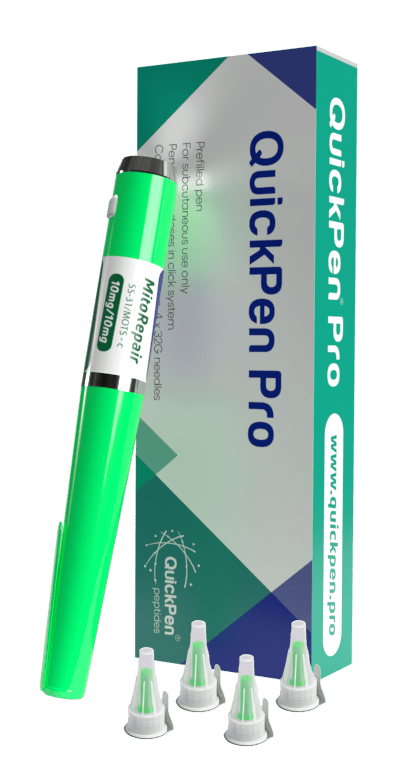
QuickPen Pro е готов за употреба, изключително удобен уред за доставяне на пептиди, предназначен за прецизно и последователно дозиране при изследвания. Той съчетава висококачествен инжектор под формата на писалка с предварително измерени изследователски пептиди за подобрена точност и лекота на лабораторно приложение.
Свързани пептиди
-
CJC-1295 без DAC 10 мг
Обичайна цена €90,00 EURОбичайна цена -
MitoRepair Blend SS-31 10mg/MOTS-c 10mg
Обичайна цена €149,00 EURОбичайна цена -
TestoGen 20mg
Обичайна цена €69,00 EURОбичайна цена -
HGH 13.3мг 40IU
Обичайна цена €90,00 EURОбичайна цена


Публикации в блог
Покажи всички-

Какво е Ипаморелин? Преглед на изследванията на...
Общ преглед, фокусиран върху изследванията на ипаморелин – неговият механизъм като селективен агонист на GHS-R1a, изследователските приложения в проучвания на GH оста и метаболизма и как той се сравнява с...
Какво е Ипаморелин? Преглед на изследванията на...
Общ преглед, фокусиран върху изследванията на ипаморелин – неговият механизъм като селективен агонист на GHS-R1a, изследователските приложения в проучвания на GH оста и метаболизма и как той се сравнява с...
-

BPC-157 срещу TB-500: Какво показва изследванет...
Сравнение на BPC-157 и TB-500, фокусирано върху научни изследвания – два от най-изследваните пептиди за тъканно възстановяване, включващо техните различни механизми и защо често се изследват заедно.
BPC-157 срещу TB-500: Какво показва изследванет...
Сравнение на BPC-157 и TB-500, фокусирано върху научни изследвания – два от най-изследваните пептиди за тъканно възстановяване, включващо техните различни механизми и защо често се изследват заедно.
-

Проучване на GHK-Cu: Регенерация на кожата, под...
GHK-Cu е естествено срещащ се меден трипептиден комплекс с един от най-широките изследователски профили в регенеративната биология. Изследван за синтез на колаген, зарастване на рани, стимулиране на космените фоликули, активиране...
Проучване на GHK-Cu: Регенерация на кожата, под...
GHK-Cu е естествено срещащ се меден трипептиден комплекс с един от най-широките изследователски профили в регенеративната биология. Изследван за синтез на колаген, зарастване на рани, стимулиране на космените фоликули, активиране...


